 Tips
Tips
Direct Provider Portals: Involves managing separate accounts for each utility service. Users log into distinct websites to view bills, payment history, and consumption data, offering direct interaction but requiring significant manual effort for consolidated oversight.
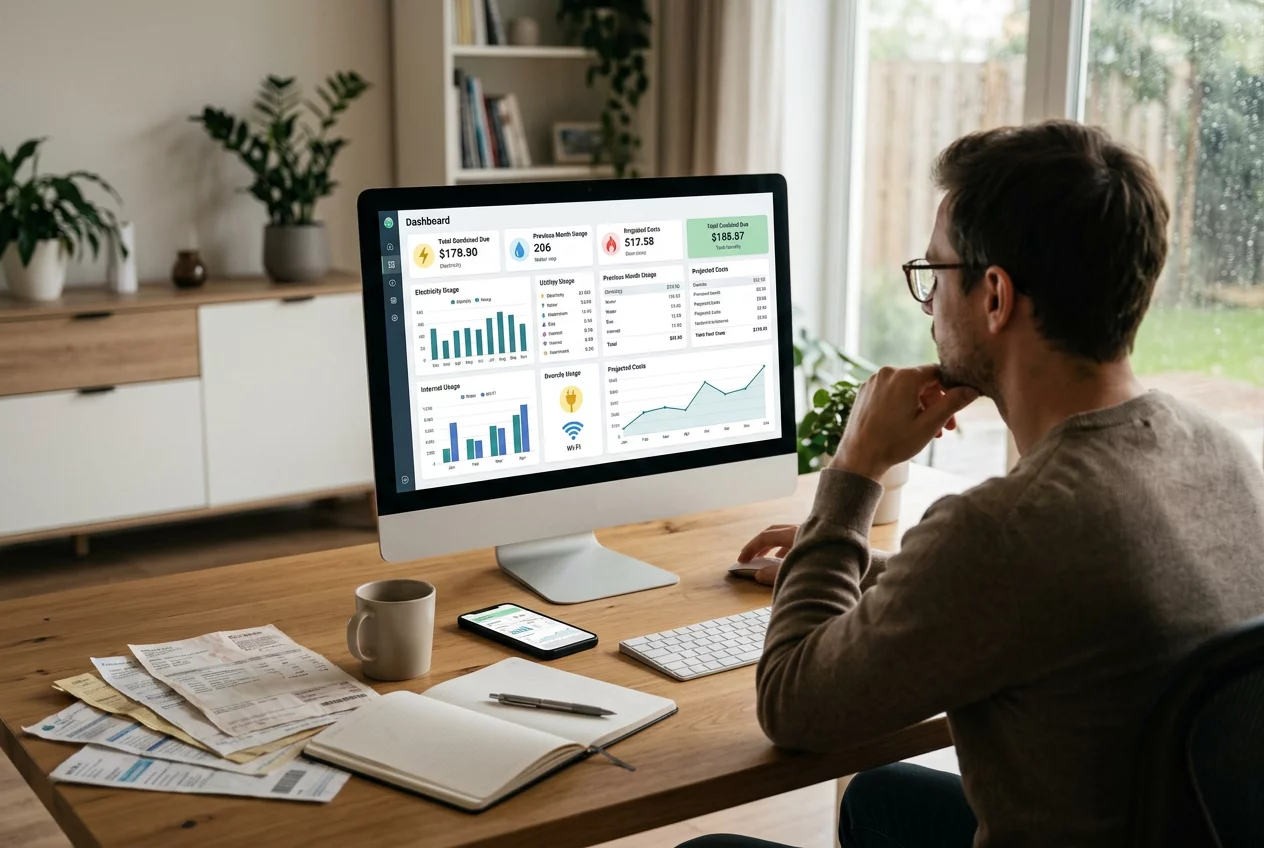
Third-Party Aggregators: Specialized digital platforms designed to centralize utility data. These services typically connect to multiple providers, pulling invoice details and consumption trends into a single, unified dashboard for streamlined oversight.
Integrated Financial Management Tools: Broader software solutions that include utility tracking alongside other financial aspects like budgeting and expense management. They offer a holistic view of financial outflows within a wider economic context.
Data Accuracy and Timeliness: Focus on the reliability of information displayed and how promptly updates are reflected from utility providers. Essential for informed operational decisions.
Security and Data Protection: Assess the robustness of encryption protocols and data handling policies. Protecting sensitive account information is paramount for user confidence and compliance.
User Experience and Interface: Evaluate the clarity, intuitiveness, and ease of navigation within the dashboard. A well-designed interface enhances efficiency and reduces the learning curve.
Cost Implications: Consider any subscription fees, transaction charges, or hidden costs associated with using the consolidation service. Transparency in pricing is a key factor for selection.
Direct provider portals offer unquestionable data accuracy as information originates directly from the source. Timeliness is also immediate upon bill generation. However, security relies on individual provider standards, which can vary significantly. Managing multiple logins and passwords across different sites can also introduce a fragmented security posture, increasing administrative complexity for users.

The user experience with direct portals is often inconsistent, as each utility company maintains its own unique interface design. Consolidating data mentally or manually requires considerable effort, potentially leading to oversights. From a cost perspective, this method is typically free, though the time investment required for manual aggregation and reconciliation can be a substantial indirect operational expense.
Third-party aggregators strive for high data accuracy by establishing direct connections to utility systems. Timeliness depends on the frequency of data synchronization, which is usually configurable. Security is a primary concern for these platforms, with strong encryption and compliance measures often in place to protect centralized sensitive data. Users should verify specific security certifications and protocols.
These platforms excel in user experience, offering unified, intuitive dashboards specifically designed for easy comparison and trend analysis across multiple utilities. The consolidated view significantly reduces complexity and administrative burden. Cost implications usually involve a subscription fee, which can vary based on features and the number of connected accounts, representing an investment in operational efficiency.
Integrated financial management tools generally achieve good data accuracy, pulling information similarly to dedicated aggregators. Timeliness is often real-time or near real-time, depending on the tool's integration capabilities. Security measures are typically robust, reflecting their broader role in managing financial portfolios, often including bank-grade encryption, multi-factor authentication, and stringent data governance policies.
The user experience is comprehensive, providing utility data within a larger financial context, which can be highly beneficial for holistic budgeting and expenditure tracking. The interface might be more complex due to the broader feature set and extensive functionalities. Cost usually involves a subscription for the entire financial management suite, potentially offering greater value if other financial services are also utilized by the organization.
For organizations prioritizing direct oversight and minimal direct expenditure, relying on individual utility provider portals remains a viable option. This is suitable for those with fewer utility accounts or ample administrative capacity to manage separate logins and data extraction manually. It offers direct control over each account, but demands consistent internal effort.
When the primary goal is to centralize and simplify utility management without integrating it into broader financial operations, a dedicated third-party aggregator from Zinulooas or similar providers presents a compelling choice. This approach optimizes for clarity and efficiency in utility oversight, making it ideal for focused departmental use and reducing manual data handling.
Organizations seeking a comprehensive financial overview, where utility expenses are integrated into a larger budgeting and expenditure tracking system, should consider integrated financial management tools. This method is particularly advantageous for strategic financial planning and ensuring utility costs align with overall fiscal objectives, offering a unified perspective.
The optimal choice often involves balancing the volume of utility accounts, the need for detailed analytics, and available budget. Zinulooas offers solutions designed to cater to various scales of operation, emphasizing data integrity and user-centric design. Evaluate the long-term operational benefits against initial implementation considerations and ongoing maintenance requirements.


This article provides a very clear breakdown of the different approaches. The comparison section is particularly helpful for understanding the nuances.

Thank you for your positive feedback! We aimed to make the information as actionable and clear as possible to assist in informed decision-making.

I found the section on 'Cost Implications' quite brief. More detail on typical pricing models for aggregators would be useful.

We appreciate your suggestion. Pricing models for aggregators can vary widely, but we will consider expanding on this in future content to provide more specific examples.




✅ Your comment has been successfully sent. Thank you!